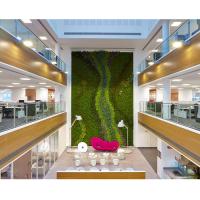
Aluminium Alloy Interior and Exterior Wall Panel Series
Send a free RFQ and get the supplier's best price.
Trade with confidence on Abraa
Safe and secure payments using Abraa safe trade systems
Supplier verification not completed
Pay only through Abraa to stay protected. Never pay a supplier by direct transfer.
Secure Payment
Pay through Abraa, never by direct transfer to a supplier.
Product Inspection
Book a check before shipping to confirm quality and quantity.
Buyer Protection
Get support and refunds if goods arrive not as described.
Verified Suppliers
Licence, address and on-site checks by the Abraa team.
Product Specification
| Brand | Reliable-瑞立保 |
Product Descriptions
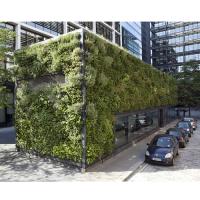
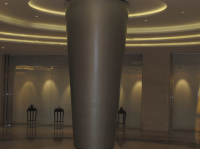
Building Curtain WallAccording to the materials used for the panels, curtain walls are divided into glass curtain walls, metal curtain walls, and stone curtain walls. Aluminium alloy curtain wall panels are widely used and have become the mainstream material for modern large-scale building curtain wall decoration. Aluminium alloy curtain wall panels are widely applied in building curtain walls, interior wall decoration panels, indoor ceilings, partition walls, column and beam covers, balcony door frames, window sills, and screen decorations because of their lightweight, good plasticity, easy installation and transportation, high safety performance, and bright colours.The surface coating of aluminium alloy curtain wall panels mainly uses fluorocarbon resin baking paint, which is classified on-site as:
- Single coat: colour spray paint
- Double coat: primer colour paint
- Triple coat: primer colour paint clear coat
- Quadruple coat: primer isolation coat color paint clear coat
The fluorocarbon resin PVDF on the aluminium alloy curtain wall panel surface is a polyvinylidene fluoride in which fluorine atoms replace some hydrogen atoms in the aliphatic hydrocarbon molecular structure. The fluorine-carbon bond between the fluorine (F) atom nucleus and the carbon (C) atom has a bond strength greater than 105.4 kcal/mol, meaning that at least 105.4 kcal/mol of energy is needed to break the bond. The fluorine-carbon bond length is 1.36 Å, which is shorter than the typical carbon-carbon bond length of 1.54 Å. Due to steric hindrance caused by fluorine atoms, the structure is very dense, and the fluorine-carbon bond is difficult to break.
 \
Similar Products
View all