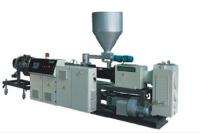
TWIN SCREW EXTRUSION TECHNOLOGY
Send a free RFQ and get the supplier's best price.
Trade with confidence on Abraa
Safe and secure payments using Abraa safe trade systems
Supplier verification not completed
Pay only through Abraa to stay protected. Never pay a supplier by direct transfer.
Secure Payment
Pay through Abraa, never by direct transfer to a supplier.
Product Inspection
Book a check before shipping to confirm quality and quantity.
Buyer Protection
Get support and refunds if goods arrive not as described.
Verified Suppliers
Licence, address and on-site checks by the Abraa team.
Product Specification
| Brand | Clextral Machinery |
| Condition | New |
| Warranty | YES |
| Mechanical Condition | Others |
| Fuel Type | Gasoline |
Product Descriptions
The Twin Screw Extrusion (TSE) process , developed by Clextral for over 50 years, enables the continuous production of highly homogeneous and finely structured products, using bio-sourced or synthetic raw materials. It is used to produce a wide range of Food & Feed products, Cellulose pulps, Bio-sourced plastics and chemicals.
How does extrusion work?
Extrusion processing aims to physico-chemically transform continuously viscous polymeric media and produce high quality structured products thanks to the accurate control of processing conditions.
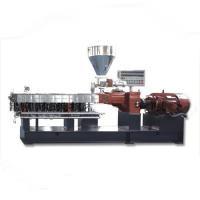
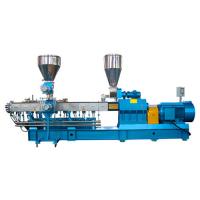
Clextral twin screw extruders consist of two intermeshing, co-rotating screws mounted on splined shafts in a closed barrel. Due to a wide range of screw and barrel designs, various screw profiles and process functions can be set up according to process requirements. Hence, a twin screw extruder is able to ensure transporting, compressing, mixing, cooking, shearing, heating, cooling, pumping, shaping, etc. with high level of flexibility. The major advantage of intermeshing co-rotating twin screw extruders is their remarkable mixing capability which confers exceptional characteristics to extruded products and adds significant value to processing units.
In twin screw extrusion processing, the raw materials may be solids (powders, granulates, flours), liquids, slurries, and possibly gases. Extruded products are plastics compounds, chemically modified polymers, textured food and feed products, cellulose pulps, etc.
 \
Similar Products
View all