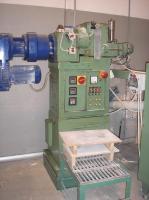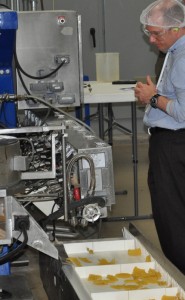
TWIN SCREW FOOD EXTRUSION
Send a free RFQ and get the supplier's best price.
Trade with confidence on Abraa
Safe and secure payments using Abraa safe trade systems
Supplier verification not completed
Pay only through Abraa to stay protected. Never pay a supplier by direct transfer.
Secure Payment
Pay through Abraa, never by direct transfer to a supplier.
Product Inspection
Book a check before shipping to confirm quality and quantity.
Buyer Protection
Get support and refunds if goods arrive not as described.
Verified Suppliers
Licence, address and on-site checks by the Abraa team.
Product Specification
| Brand | Clextral Machinery |
| Condition | New |
| Warranty | YES |
| Power Source | Others |
Product Descriptions
Twin screw extrusion technology was first used in 1956 as a technique for processing
plastics and Clextral was a pioneer in that field. Clextral then became the first company to
apply extrusion technology to food processing over 40 years ago.
Since then, it has continued to innovate and is today a recognized leader in new generation
twin screw extruders for Food & Feed processing.
Twin-screw extrusion processing versus conventional food processing
essai chips snacksSustainable: remarkable process-intensifying capability of twin-screw
extrusion technology and associated processing lines allows determinant operational
advantages to be achieved, such as: continuous HTST (High Temperature-Short Time)
cooking, high productivity owing to reduced downtime and material losses, energy and water
savings, reduced footprint.
Highly flexible: the same processing line is able to process various types of raw materials
and mix formulations, and to produce a wide range of end products; whereas conventional
cereal cooking processes (baking, hydrothermal cooking, etc.) are often limited to the
production of low ranges of end-products with restricted possibilities to change operating
parameters.
Fully automated, with high level of operating stability; hence leading to consistent product
quality; whereas conventional processing lines require frequent adjustment of process
parameters.
Fairly well suited to product innovation, with the possibility to target easily the four basic
quality attributes of food products that are taste, flavour, texture and nutrition; product
innovation may include upgrading of existing products as well as new products.
Economical and cost-effective, as they are characterized by reduced CAPEX and OPEX due
to the remarkable process-intensifying capability of extrusion processing technology.
 \
Similar Products
View all